
Nevada access control installers and the C-2d license
In Nevada, door access wiring fits the Contractors Board's C-2d low voltage subclass, which covers systems that do not exceed 91 volts.
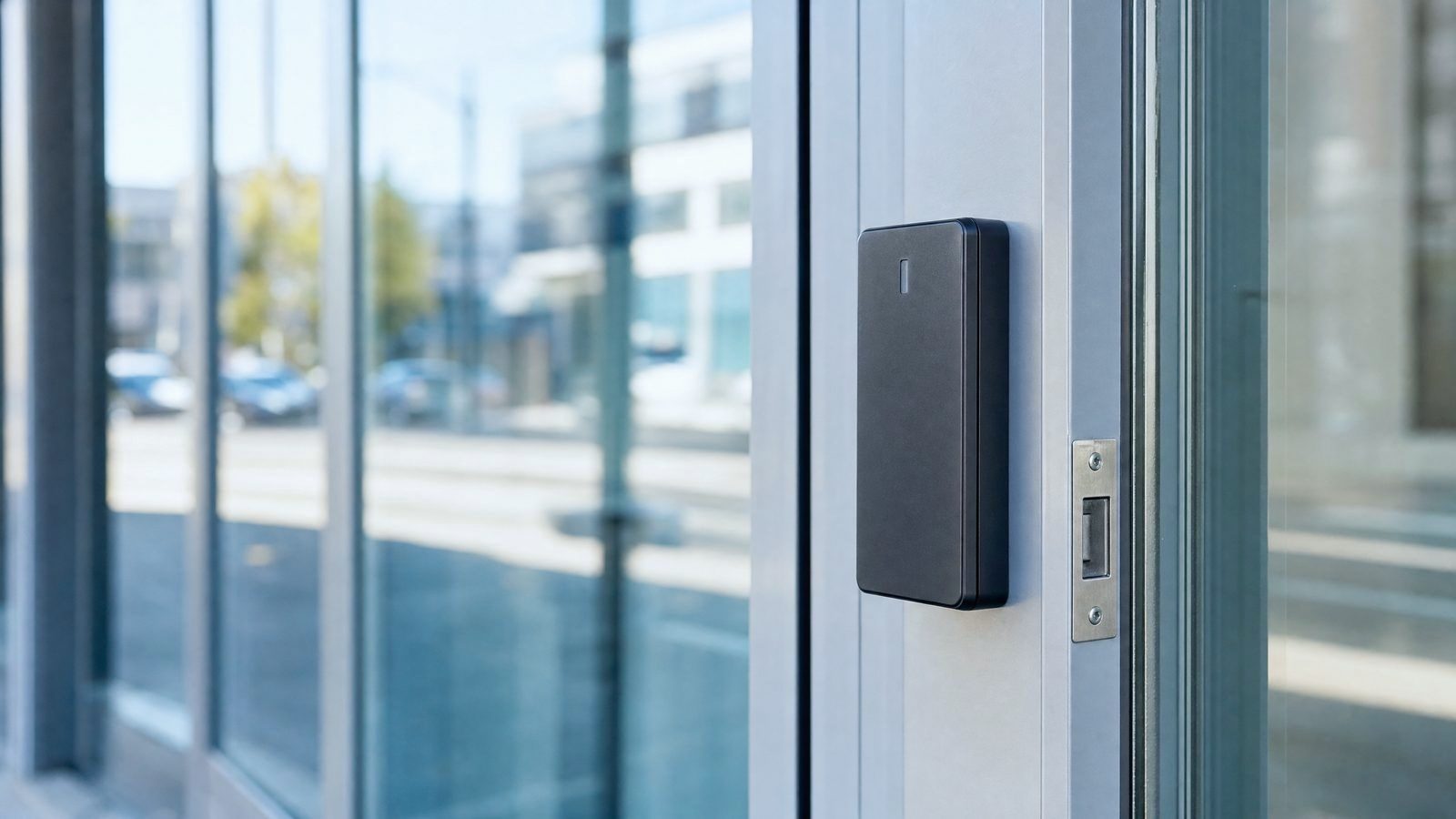
- The license this work calls for
- Low voltage systems under C-2d (Nevada State Contractors Board)
- Maximum voltage
- Fiber optics, or 91 volts
- Bond for the contractor
- $1,000 to $500,000, determined by the board
- Look up a license
- NSCB license search
Check an installer's license
Nevada State Contractors Board keeps these records. Search by name or license number.
Open the Nevada lookupGet a price for your doors
The 91‑volt rule for Nevada low‑voltage contractors
In Nevada, electrical licensing isn't handled by separate trade boards. Both electricians and low voltage companies get their license from the same source: the Nevada State Contractors Board. The C-2 electrical contracting classification comes with a number of subclasses.
Subclass C-2d, under NAC 624.200, applies to systems that stay at or below 91 volts or rely on fiber optics. The list includes cable TV, telephone, closed circuit video, sound, computer networks and temperature controls.
Most card readers, keypads and electric strikes operate well under 91 volts. Although the regulation doesn't mention access control directly, we treat it as included based on the voltage limit. Any work a C-2 subclass allows can also be done by a full C-2 electrical contractor.
Qualifying as a contractor in Nevada
The qualified individual tied to each license is the one who demonstrated the needed skills. The board's licensing questions page requires 4 years of experience as a journeyman, foreman, supervisor or contractor in the classification you're applying for. That experience needs to fall inside the 15-year window before you apply.
A trade exam is needed for most classes, and they pass a Business and Law exam as well. After that, the board fixes a bond amount for the license, somewhere between $1,000 and $500,000. To stay active, a license must maintain its bond, retain its qualified individual and carry workers' compensation.
Fire alarm doors call for the proper subclass
When a building's fire alarm activates, certain doors are required to release their locks. The wiring that connects to that system falls under subclass C-2c, fire detection, which includes heat and smoke sensors, alarms and their associated wiring.
If your doors connect to a fire alarm panel, find out whether the installer carries C-2c or works alongside a holder. Fire detection is not listed on a C-2d license by itself.
Finding the license record and your local codes
The board's license search accepts a license number, the name of the qualified individual or a company name. Entering part of a name also works. Make sure the record shows C-2d or C-2.
Maglock exit requirements come from your local building code. As of January 11, 2026, Clark County follows the 2024 International Building Code plus Southern Nevada amendments. The 2023 National Electrical Code is also on its list. For places outside Clark County, contact the local building department to learn which editions are in force.
Price per door, installed
Published price ranges across the U.S., based on your current door setup. After viewing the doors, a Nevada installer gives you a firm price.
| On the doors now | Installed, per door |
|---|---|
| Keys only | $1,200 to $2,500 |
| Keypads | $500 to $1,500 |
| Card or fob readers | $500 to $1,500 |
| Not sure | $1,000 to $3,000 |
In Nevada, is card reader installation allowed for electrical contractors?
Work authorized under the C-2 subclasses is open to a C-2 electrical license holder, and C-2d is among them. Before you sign, verify the classification through the board's search tool.
Compare licenses in every state
Installers of access control in a different state
- Alabama
- Alaska
- Arizona
- Arkansas
- California
- Colorado
- Connecticut
- Delaware
- District of Columbia
- Florida
- Georgia
- Hawaii
- Idaho
- Illinois
- Indiana
- Iowa
- Kansas
- Kentucky
- Louisiana
- Maine
- Maryland
- Massachusetts
- Michigan
- Minnesota
- Mississippi
- Missouri
- Montana
- Nebraska
- New Hampshire
- New Jersey
- New Mexico
- New York
- North Carolina
- North Dakota
- Ohio
- Oklahoma
- Oregon
- Pennsylvania
- Rhode Island
- South Carolina
- South Dakota
- Tennessee
- Texas
- Utah
- Vermont
- Virginia
- Washington
- West Virginia
- Wisconsin
- Wyoming