
Commercial security camera installation
Commercial security camera installation covers the cameras, the cabling, the recorder or cloud plan and the setup, so footage is kept long enough to use. The camera count and the cable runs set most of the price.
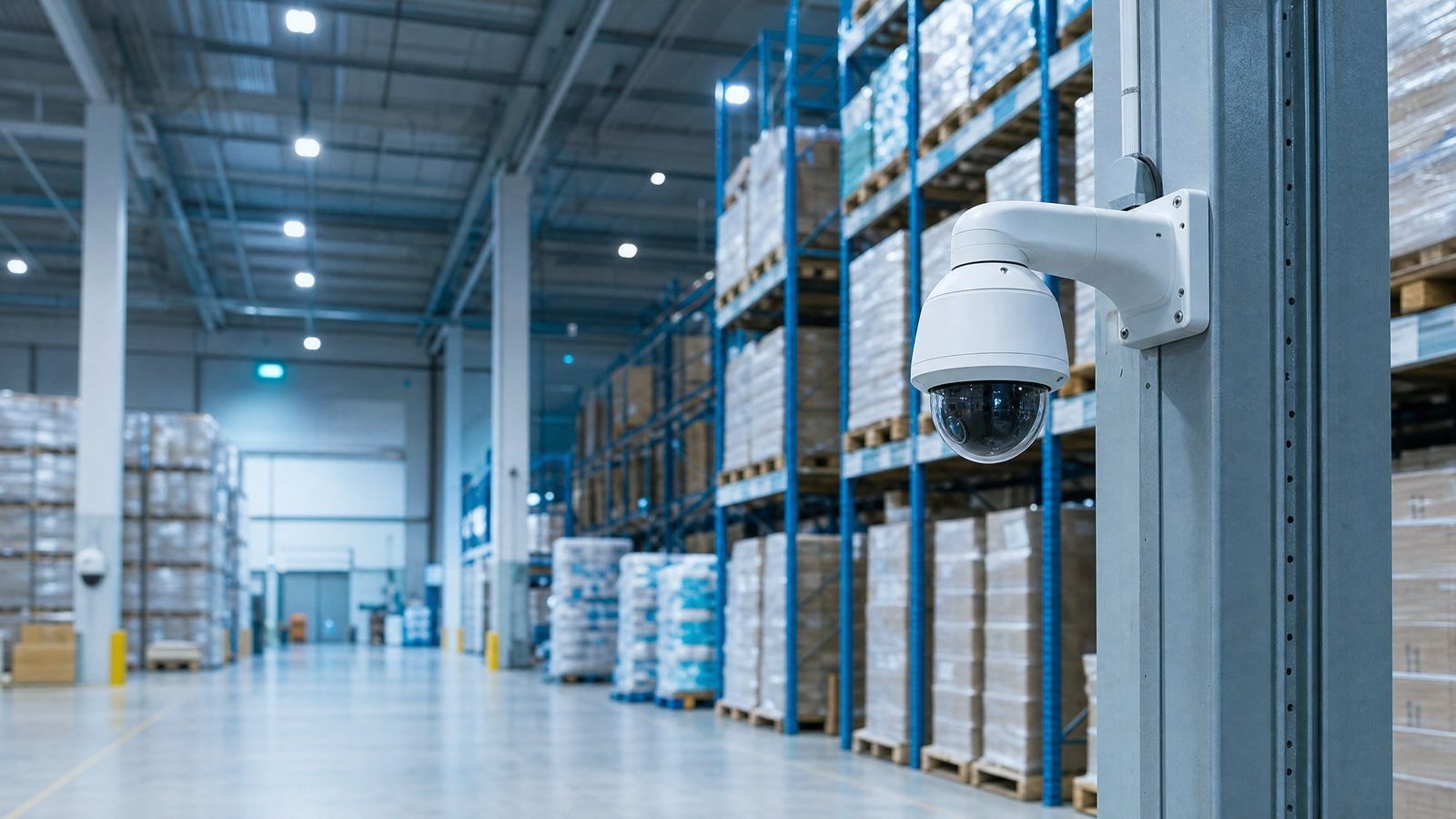
Commercial security camera installation typically runs $900 to $3,000 per camera, fully installed, and small businesses generally want 4 to 16 cameras. We can include cameras in your door brief, so a single local installer gives you pricing for the cameras and the door access at the same time.
- Per-camera price, fully installed: $900 to $3,000
- Small business with 4 to 12 cameras: $5,000 to $36,000 installed
- How many cameras a typical small business ends up with: 4 to 16
- Usual footage retention period: 30 days
That figure per camera is based on WCC Tech Group's cost guide. It includes the cable running to each camera, part of the network gear, the mounting work and year one of software. Open the survey from the home page and pick Cameras under Add details so the installer sees your entire building in a single brief, or call us to have someone write down your cameras, doors and wiring so the quote starts from the facts.
Security camera installation cost per camera
Where the recordings are stored drives most of the per-camera price. A cloud-managed setup stores video online and you manage it through a website or app. An on-premises setup keeps the video on a recorder sitting in your building.
| Type of system | Price per camera, installed | Annual cost once year 1 ends |
|---|---|---|
| On-premises | $900 to $2,200 | None typically listed |
| Cloud-managed | $1,300 to $3,000 | Roughly $150 to $250 a camera |
These on-premises and cloud prices come from WCC Tech Group. Across 5 years, on-premises tends to cost 15 to 30 percent less than cloud.
Every camera needs a cable drop of its own, meaning one network cable run from the camera to your network equipment. Running a new drop usually costs another $150 to $400. On an easy site, just the labor to mount one camera is roughly $94.71 to $227 per camera, which means most of what you pay goes toward the equipment, cabling and software.
WCC Tech Group gives one worked example: a small business with 10 cloud cameras pays $12,700 to $26,300 for the first year. Per camera, that works out to $1,270 to $2,630.
What the yearly license buys
The license is the annual fee that lets a camera run the manufacturer's software. Cloud systems require one for every camera. On Verkada's published price list, the 1-year license runs $249 per camera, a 5-year license runs $1,099 and a 10-year license runs $2,199. Rhombus likewise charges for the hardware plus a license per camera. Eagle Eye Networks bills monthly, usually $15 to $45 per camera.
The camera hardware also varies a lot. At 2026 list prices, Verkada cameras cost about $699 to $7,899 each, and the storage built into the camera is the main factor behind that spread.
CCTV installation for commercial buildings
PoE cameras are what most businesses use now. With PoE, one network cable carries both the power and the data, so the camera doesn't need an outlet close by. A single cable run tops out at 328 feet, or 100 meters before you need an extender, which means a big lot or warehouse might call for extra gear.
Businesses typically keep footage for 30 to 90 days, though certain industries must hold it longer. Healthcare, cannabis and public agencies frequently require extra storage or an extended license, and that pushes the price up.
When you swap out an old system, removing it usually adds 5 to 15 percent to the total. Cheap quotes often skip the network switches that supply power to the cameras and the separate camera network that keeps video traffic away from your office computers.
Cameras with audio
Federal law handles sound and video in different ways. A conversation is protected if the people speaking expect it is not being recorded. Recording stays lawful when you are part of the conversation or one party has agreed in advance. Violating the federal wiretap law can mean a fine or as much as 5 years in prison, which is why audio deserves careful thought before anyone turns it on.
Brands federal contractors cannot use
As of August 13, 2020, federal rules prohibit agencies from contracting with any business using video equipment from Hikvision, Dahua or Hytera. That applies to private firms holding federal contracts too. Since March 12, 2021, these brands have also appeared on the FCC Covered List. When you do federal work, mention it to the installer so these brands stay out of the quote.
Choosing between security camera installation companies
For the same building, quotes can vary by 50 percent or more. Usually the difference comes down to the amount of work covered, the quality of the gear or how long the license runs. A complete quote shows cameras, the license period, network gear, cabling, labor and training on their own separate lines, so you can compare one company against another line by line rather than looking only at the bottom number.
If one quote comes in well under the rest, make sure it covers the switches, the cable drops and taking out the old system if there is one. We hand the installer one clear brief, so their quote is based on what your building actually contains.
Can I find security camera installers in my area?
Yes, you can. Once you submit the survey with your ZIP code, a local installer working in that area receives it. That installer reaches out about your building and gives you the real price after visiting the site. Our ranges are drawn from published guides, and a visit is the only thing that sets the actual figure.
Ahead of the visit, it helps to write down the nearest power outlet and network point, and to note if any of your doors carry a fire rating. Doors with a fire rating have a label along the edge or on the frame.
Common questions
What does a commercial security system cost to install?
According to Militia Protection, businesses generally pay $5,000 to $25,000 for a professionally installed camera system. It pairs a small business below 5,000 square feet with a setup of 4 to 12 cameras. Bringing door access into the job pushes the total higher, from roughly $500 per door where electric locks already function up to $2,500 per door where only keys exist.
Is a longer license cheaper?
Yes, on a per-year basis. Verkada's list shows 5 years at $1,099 per camera, compared with paying $249 every year for 5 years. The trade-off is that the longer term means a bigger payment up front.
How much footage history can cloud systems hold?
Eagle Eye has plans ranging from 7 days all the way to 5 years per camera. Certain cameras hold footage on the camera itself; the Verkada 3MP CD22 dome keeps 30 days in the storage built into it.
Can one installer handle both cameras and door access?
Yes. Answer the 3 door questions, tick Cameras under Add details and send the survey in free, and one local installer will price the whole job.