
Access control installation cost per door
Access control installation cost is the price of putting a reader, an electric lock and the wiring on each door, plus the controller, the software and the cards or phones that open it. These ranges are for business and apartment doors; a smart lock on a house door is a far smaller job, and gates are priced separately.
- Installed, per card or phone door
- $1,500 to $3,500
- Doors where electric locks already work
- $500 to $1,500
- Cloud license, per door each month
- $3.50 to $15
- Cards or fobs, each
- $4 to $25
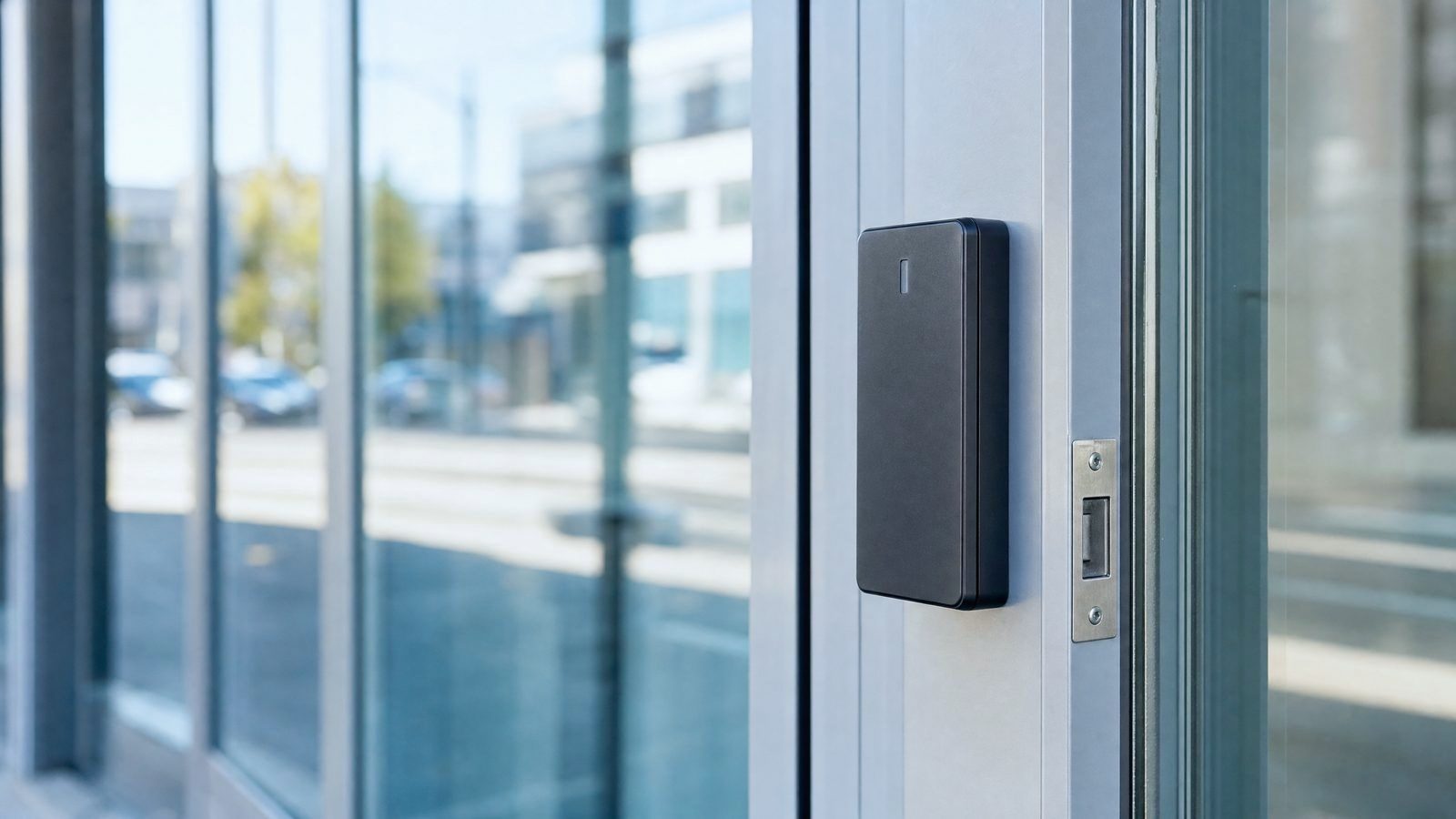
Installed price by the way people get in
Each figure is a published installed price for one door or one entry. Readers alone cost far less; the lock, controller, cable and labor make up the rest.
| Way in at the door | Installed, per door | Good to know |
|---|---|---|
| Keypad with PIN codes | $500 to $1,200 | Cheapest, but a keypad keeps no record of which person opened the door. |
| Card or key fob reader | $1,000 to $2,500 | Fobs and cards are bought on top, $4 to $25 each. |
| Card or phone, standard commercial door | $1,500 to $3,500 | With phones as keys, no cards to buy; a cloud plan adds $3.50 to $15 a door each month. |
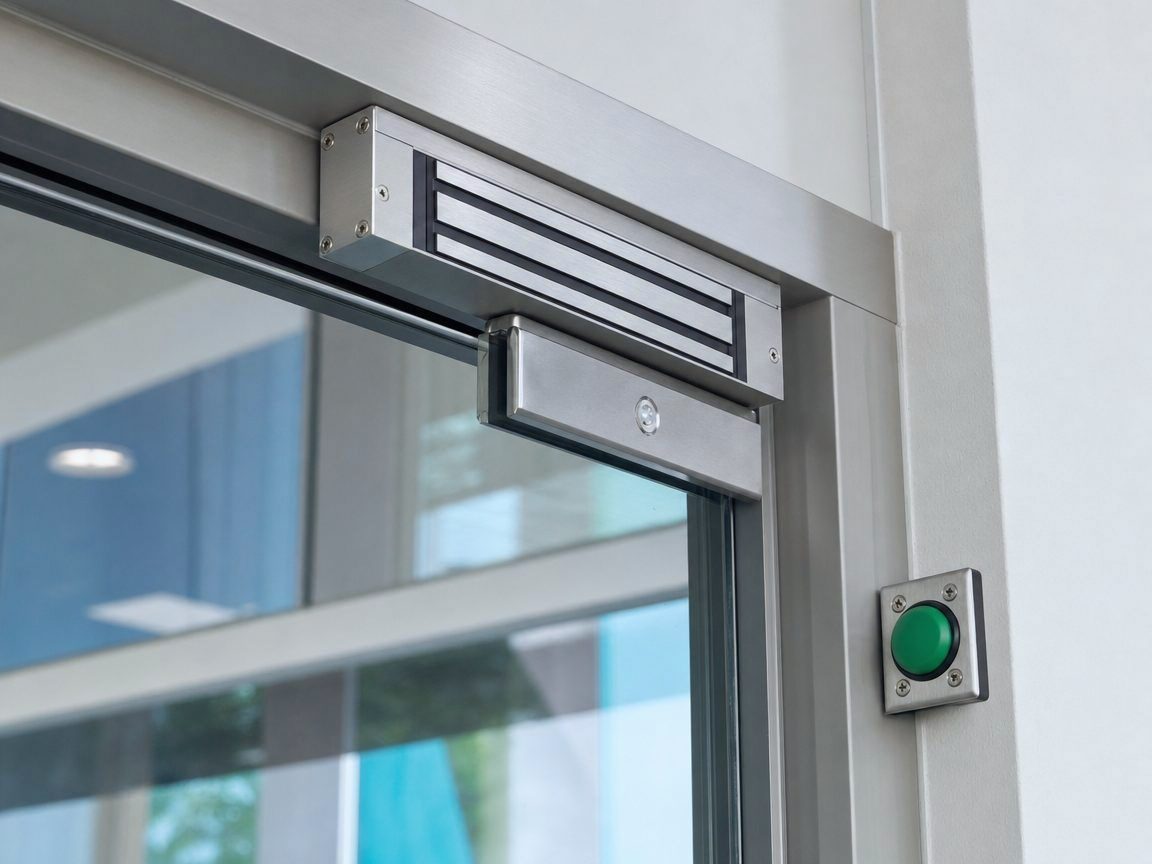
| Maglock on a pair of glass doors | $1,800 to $3,500 | Includes the fire alarm link that releases the lock; see the maglock egress rules. |
| Fingerprint reader | $1,500 to $3,000 | Face recognition runs $2,500 to $5,000 a door. |
| Video intercom at the entrance | $1,000 to $7,000 and up | Priced per entry; the intercom guide covers the types. |
Swipe the table sideways to see every column.
Sources: ackermansecurity.com, avigilon.com, getsafeandsound.com, techprosecurity.com
Access control installation cost for most card or phone doors is $1,500 to $3,500 each, fully installed. Where yours lands depends mostly on what is on the door now.
Our free door survey asks just 3 things: what hardware sits on your doors today, the sort of building you have and how many doors are involved. It then shows a range for each door and for the whole building. Start the survey or call us now, since a fair quote starts from what's really on your doors.
What a whole building costs
Two things push the total up or down: the door count and the amount of work each door needs. A door with nothing but a key lock is the biggest job, since it needs a lock, a reader and new cable run back to a controller, the small panel that controls who can open each door. When the electric locks already work, the work comes down to new readers, adding a controller and setting up the system.
| Building | What's on the doors today | Likely total |
|---|---|---|
| 4 doors | Just key locks | $4,800 to $10,000 |
| 4 doors | Electric locks working | $2,000 to $6,000 |
| 10 doors | Hardware unknown | $10,000 to $30,000 |
If no one has looked at the hardware yet, a full card or fob setup generally comes in at $1,000 to $3,000 for each door. That figure covers readers, panels, wiring, network work and training. Kisi's guide puts a single door at about $3,850 with the first year of running it included, so it reaches beyond the install alone.
Cost by part
A typical door needs an electric lock and a reader. A controller manages access and may serve several doors. Wiring, power and labor make up the rest.
| Part | Typical price |
|---|---|
| Electric locking hardware | $50 to $900 per door |
| Reader unit | $80 to $1,200 apiece |
| Controller, which can handle anywhere from 2 up to 32 doors | $180 to $3,500 |
| Cabling together with the power supply | $200 to $600 per door |
| Labor for the installation itself | $500 to $2,500 per door |
A simple magnetic lock runs about $50 to $200, while heavy-duty magnetic locks and electric strikes come in at $400 to $900. An electric strike mounts in the door frame and frees the latch once the system lets someone through.
A few manufacturers publish their prices openly. Ubiquiti's store shows $199 for a one-door controller, $999 for an eight-door hub and $149 for a magnetic lock. Verkada prices its one-door controller at $899 plus a license, and its four-door controller at $1,999 with the first year's license included. Kisi's list shows $850 for the controller, $475 for the reader and $595 for the terminal.
Labor is often billed by the hour. Expect $80 to $200 an hour from locksmiths and up to $300 from IT companies. Electricians on wired installs charge roughly $75 to $150 an hour.
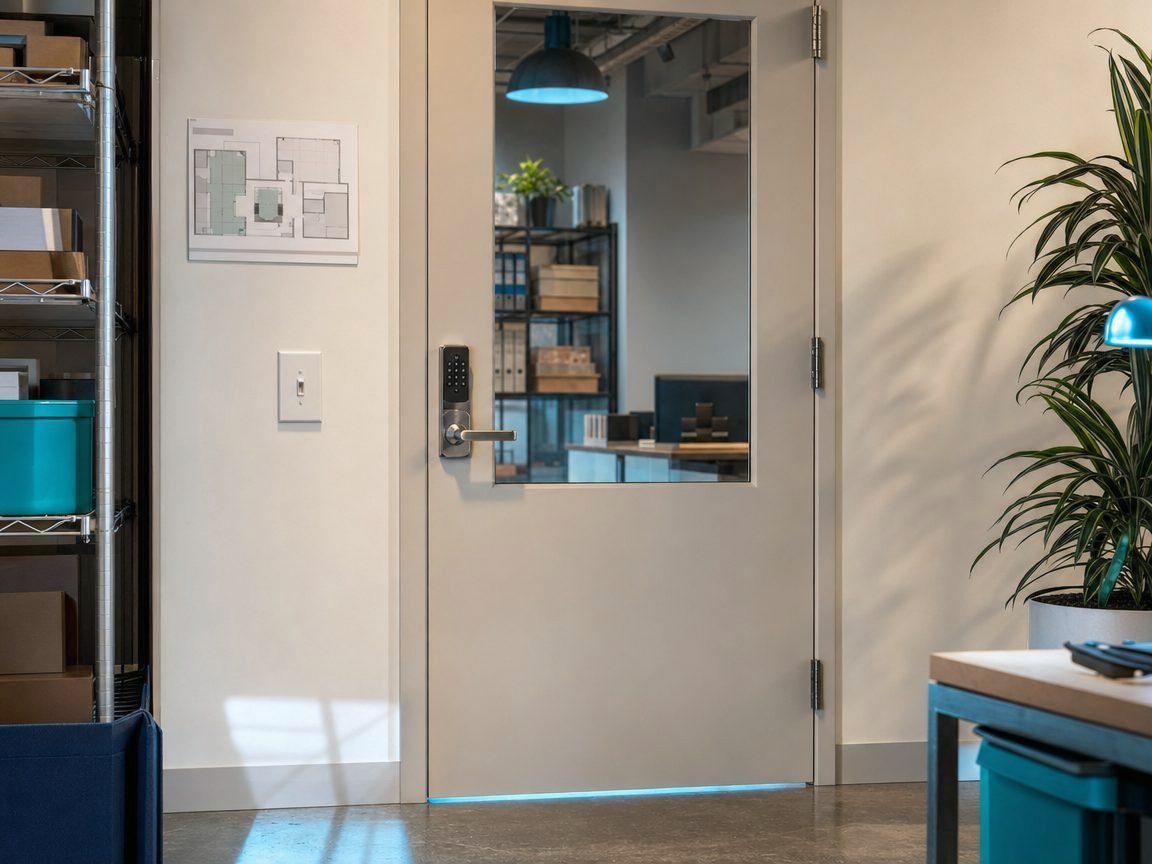
What a key fob door entry system costs
Avigilon's guide prices a fob-based door at $1,000 to $2,500. The fobs themselves are bought separately, one for each person who needs to get in. Fobs and cards run $4 to $25 apiece. Encrypted smart cards, which are difficult to duplicate, run $6 to $15 each.
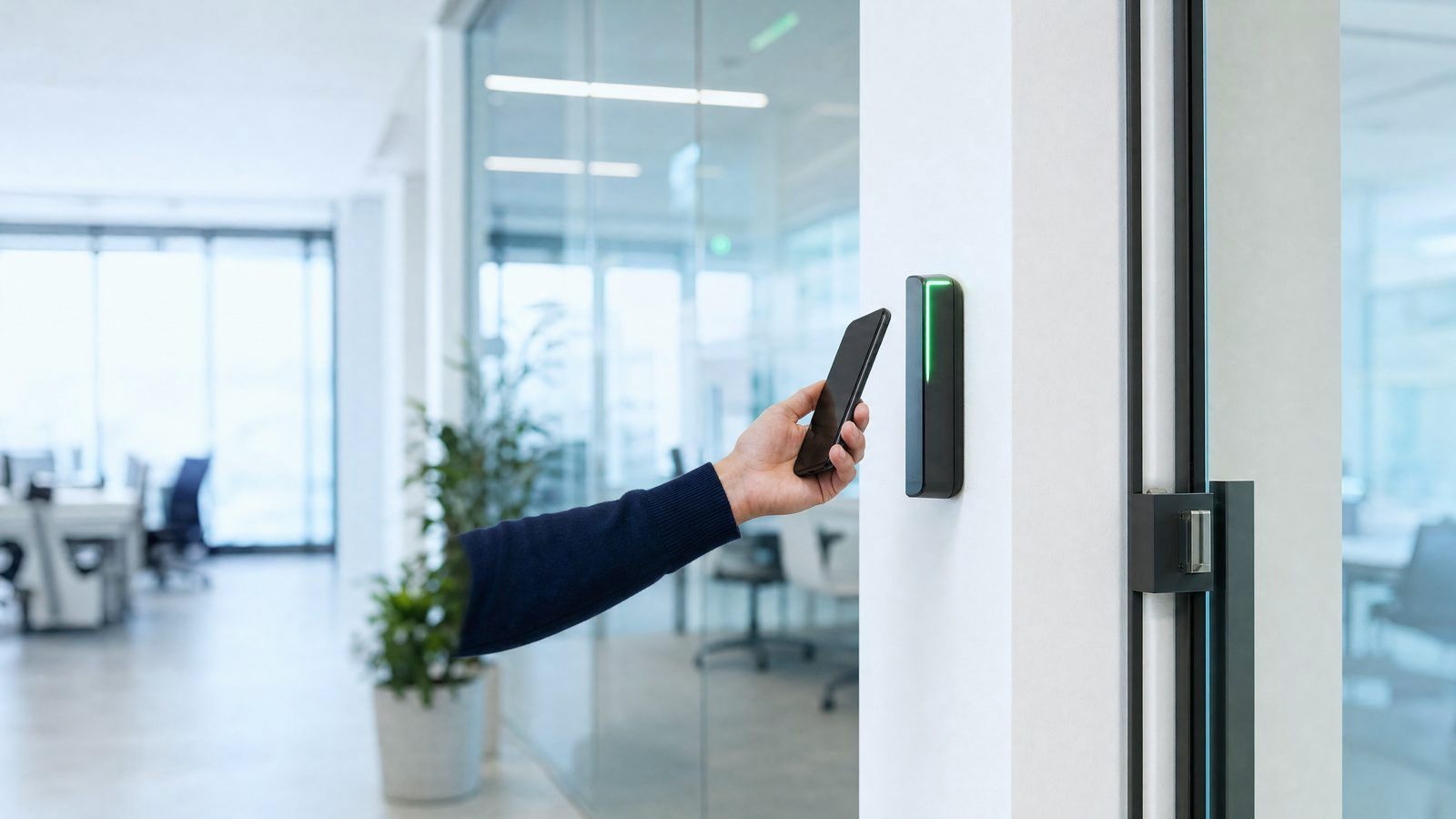
If staff use their phones to get in instead, cards and fobs drop out of the budget.
Biometric access control pricing
With biometric units, a fingerprint, a face or an eye takes the place of a card at the door. Ackerman Security estimates $2,000 to $8,000 or more for each door. On its own, the reader runs $300 to $1,200 or more, while a standard card reader is $80 to $300.
| Reader type | Cost per door |
|---|---|
| Fingerprint reader | $1,500–$3,000 |
| Face recognition | $2,500–$5,000 |
| Iris scanning | $5,000–$10,000 or more |
Certain fingerprint readers cost far less upfront. Ubiquiti sells one for $159, though the lock, controller and labor still come on top.
How the type of door changes the price
The door itself shifts the figure. Storefront doors made of full glass, along with many aluminum frames, won't accept an electric strike, so a magnetic lock is usually the answer.
| Type of work | Installed price per door |
|---|---|
| Electric strike kit (reader, exit button, sensor on the door) | $1,200 to $2,200 |
| Magnetic lock across a pair of glass doors, wired into the fire alarm | $1,800 to $3,500 |
| Electrified exit bar, power supply included | $2,200 to $4,000 |
Doors that carry a fire rating call for extra care. On a fire-rated door, an electric strike must be fail secure, so it stays locked against entry if power fails. For a fire-rated door, the exit bar hardware alone often runs $1,200 to $2,500.
Costs climb with long cable runs, conduit, concrete drilling and fire alarm connections. Power upgrades can tack on $500 to $2,000 per door. A fire rating is usually printed on a label along the door edge or frame, and it's worth noting before the installer comes.
Software fees by month and year
Cloud systems are the sort you run from a phone or computer online. Typical plans run $3.50 to $15 per door per month. Brivo's Standard plan, for instance, starts at $10 monthly, with another $6.20 to $18.50 per reader each month.
Systems hosted on a computer in your building work differently: a one-time license of $1,000 to $3,000, followed by $500 to $1,500 annually for upkeep. Those fees keep coming, so compare them before picking a system.
What do low quotes tend to miss?
A cheap quote can skip work you end up paying for down the line. Common omissions are permits and inspection, the fire alarm hookup on magnetically locked doors, backup batteries and surge protection for outdoor cable runs. If a quote you already have says nothing about these, send a survey brief and a local installer can price the full job, so you can compare it line by line with the quote you have.
How long does installation take?
| Size of job | Time on site |
|---|---|
| A single standalone door | 2–4 hours |
| 3–5 networked doors | 1–2 days |
| 10–20 doors across several areas | 3–5 days |
Calendar time can stretch beyond the hours spent at the doors. In an occupied building, the installer schedules around opening hours, occupants and other contractors, while configuration and testing add more time. The surest timeline comes once the installer has seen your doors and cable routes.
What to have ready for the installer
A quote is only as good as what the installer knows about your doors. These answers save a second visit.
- Which doors, and how many: front entrance, suite doors, back or loading doors, gates.
- What is on each door now: a key lock, keypad, card reader or electric lock, and the brand on any old panel.
- Which doors are glass or fire-rated. A fire rating is on a label on the door edge or frame.
- Where the nearest power outlet and network point are for each door, and a room where the controller can go.
- Whether the doors tie into a fire alarm, and who looks after that alarm.
- Who owns the building, and whether the landlord must approve drilling and new cable.
Code and license checks that change the quote
Doors on an exit route must still open freely from the inside. A maglock on one needs a motion sensor on the inside, a PUSH TO EXIT button 40 to 48 inches high and a release when power fails or the fire alarm sounds (IBC 1010.2.12). That wiring, and sometimes a visit from the fire alarm company, is part of the price. Every rule is on the maglock egress sheet.
Who may wire the doors depends on the state: a low voltage, alarm or electrical license. Ask for the license number and check it on the state lookup before work starts.
Sources: codes.iccsafe.org
A price for your own doors
A survey brief costs nothing to send. Calls go to Access Control Installer, not a manufacturer or vendor. Answer three quick questions in the free door survey, or call and describe your doors, so the installer's quote starts from what is really on them.
Common questions
Is a card system cheaper when readers are already in place?
Usually, yes. Existing readers and cable can sometimes stay, since an interface board lets a new controller talk to them. That brings many of these doors to roughly $500–$1,500.
Can cameras or an intercom be added at the same time?
Yes. The survey lets you ask for cameras, an entrance intercom or a gate. A commercial intercom install usually costs $1,000 to $7,000 or more for each entry.
What happens once I send the survey?
Your brief is passed to an access control installer near you, and that installer reaches out about your doors. You can also mention the panel brand on site, how people ought to get in and whether a landlord must sign off. The installer sets the real price after seeing the doors, since the figures here are estimates based on published guides and vendor pricing.