
Access control integration with the systems you already run
Access control integration means the door system shares information with other systems in the building: cameras record when a door is forced, the fire alarm unlocks doors, and staff lists add or remove badges automatically.
With access control integration, your doors may be able to work with the cameras, fire alarm or elevators you already have. Much of what you already have may stay. Answer three quick questions about your doors and we'll show a price range per door and for the whole building, then a local installer in your ZIP code gets your brief and contacts you, and it's free to send.
- Per-door pricing: $500 to $1,500 if your electric locks already work, $1,200 to $2,500 if you only have keys
- Unsure of your setup: $1,000 to $3,000 for each door
- Getting started: sending a survey brief is free
Those figures are estimates drawn from vendor price lists and published cost guides; the installer confirms the real price once they've seen the doors.
Access control and video surveillance
Some systems can show camera footage alongside door events, making it easier to check what happened at an entrance. Kisi works with outside camera systems like Rhombus, Cisco Meraki and Eagle Eye Networks. ProdataKey also connects with third-party cameras.
A few vendors do more. Verkada pairs video with door events, flags tailgating and can open a door when its own cameras spot a recognized license plate. Brivo says its video system supports more than 8,000 cameras. An installer can check whether yours are among them.
Verkada also lets a badge swipe arm or disarm the intrusion alarm, so a single badge covers doors and alarm alike.
Fire alarm connections
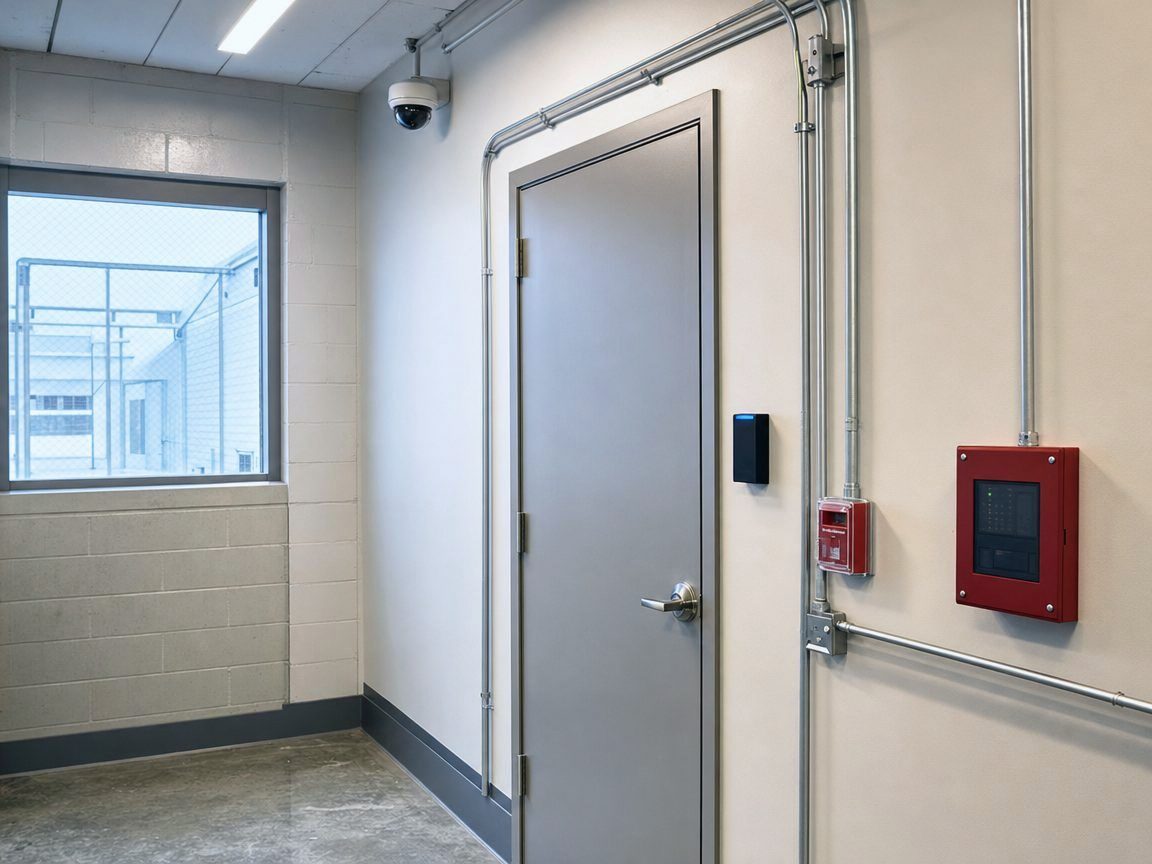
In a fire, your doors have to let people out, so the fire alarm link is planned before anything goes on the doors. IBC 2021 section 1010.2.12 requires sensor-release electric locks to open automatically when the building fire alarm sounds, and to stay open until the alarm is reset. They must also unlock from the sprinkler or fire detection system and from a power loss to the lock.
That same section calls for a manual release device mounted 40 to 48 inches above the floor, no more than 5 feet from the doors. It needs a PUSH TO EXIT sign and has to hold the lock open for 30 seconds or more.
According to NFPA, the Life Safety Code (NFPA 101) aims to prevent doors being locked along an exit path in a fire. Delayed-egress locks keep a door shut for 15 or 30 seconds.
For hardware, Kisi says its controllers work with any standard fire alarm panel you can buy off the shelf. When the alarm trips, the signal cuts power at the lock's power supply, so fail-safe doors release without depending on the cloud controller or its connection. Paxton says Paxton10 can tie into fire and intruder alarms.
The installer coordinates this with the code official and your fire alarm contractor.
Elevator access control
Elevator control decides which floors someone can get to. Genetec explains that a reader inside the car identifies the cardholder, then a switch in the control box turns on just the floor buttons that person may use. The setup is a reader in the car, one switch output per floor button and optional inputs that follow the floor position.
One installer guide, based on Kisi's own instructions, says each elevator car needs one reader, plus one controller for every four floors it stops at, up to 36 floors.
Published price examples:
| Source | Building | Cost |
|---|---|---|
| Swiftlane | Smaller building | $3,000 to $8,000 for each elevator |
| Swiftlane | Medium building | $5,000 to $12,000 for each elevator |
 ButterflyMX | All sizes | $20 monthly per elevator, a separate charge and not an installation price |
For one elevator in a small office, Swiftlane's guide puts floor access at roughly $3,000 to $8,000. If the project includes sensor-release electric locks, IBC 1010.2.12 requires them to unlock when the building fire alarm activates.
NFPA lists 12 conditions for locking elevator lobby doors, such as sprinkler and fire alarm ties, two-way communication and automatic release of the locks.
More systems that can connect
Sign-in tools can feed into your door system. Verkada and Brivo can sync users from Okta and Entra ID, and Brivo passes deactivations through automatically, so someone removed there loses door access too. Genetec syncs cardholders with Azure AD and comes with visitor management. Kisi's visitor plans go from free up to $199 per location.
At entrances, Verkada's video intercom packs intercom, camera and access control into a single device. Third-party intercoms and buttons can also be wired into Verkada's controllers, the company says. Genetec, for example, lists a yearly charge of $149 to $199 for each intercom, intrusion or video link.
Even doors without wiring can be included. ASSA ABLOY Aperio wireless locks show up in one interface alongside wired doors. Schlage AD-400 wireless locks use their own radio link that runs separately from the office computer network. Some card readers use OSDP, a standard that supports encrypted communication between the reader and the control box, so ask your installer whether yours do.
Brivo says it connects with over 400 partner systems, and Acre says it supports more than 250.
What does integration add to the price?
Hooking doors into cameras, alarms, elevators, visitor tools or a directory means extra design and setup work. GenX Security puts complete platforms that combine access, video and alarms at $10,000 to $100,000 or more.
Each system you connect adds setup time, so take the free door survey or call and describe your doors, then add your panel brand and anything else you want connected so the quote starts from what is really there. A local installer in your ZIP code receives the brief and reaches out about the doors. Ahead of the visit, jot down the closest power outlet and network point for every door, plus whether each door is fire-rated; look for the rating label on the door's edge or frame.
Common questions
Will an intrusion alarm tie into the doors?
It can. Some systems, such as Verkada's, let a badge swipe arm or disarm the alarm. Tell the installer you want this and they can tell you what your doors support.
Who sets the final price?
The installer does, once they've seen the doors. Ranges on this site are only estimates.