
Hiring an access control installer in Georgia
Georgia licenses low voltage contractors statewide, and door access work falls under one of four classes: LV-A, LV-G, LV-T or LV-U.
- The license this work needs
- A low voltage contractor class: LV-A, LV-G, LV-T or LV-U
- LV-A requirements
- You need a 70 on the exam and 3 years of supervised experience
- Door hardware codes
- 2024 IBC with Georgia amendments; 2023 NEC, Georgia amendments as well
- Look up a license
- Use the Secretary of State's licensee lookup
Check an installer's license
Georgia State Board of Low Voltage Contractors (Division of Low Voltage Contractors), Secretary of State keeps these records. Search by name or license number.
Open the Georgia lookupGet a price for your doors
Door access among the four low voltage classes
Georgia considers the power-limited thin wiring that serves door strikes, keypads and card readers a distinct trade. The state names this low voltage contracting; it includes any wiring at 50 volts or below, along with certain power-limited circuits. O.C.G.A. § 43-14-9 bars anyone from doing general, telecom or alarm low voltage contracting unless the Division of Low Voltage Contractors has licensed them.
According to § 43-14-2, low voltage contracting means systems that "control devices, or monitor conditions.". That description covers a reader that triggers an electric strike. The statute doesn't single out access control; you pick the class based on what the doors tie into.
- LV-G is for general low voltage; it means any wiring that isn't alarm or telecom.
- LV-A covers alarm systems and general systems too. If your doors connect to a burglar or fire alarm, this is the class you need.
- LV-T applies to telecom systems and also general systems.
- LV-U: all low voltage systems, without a specialty restriction.
What does a license holder in Georgia have to show?
To get an LV-A, you must score at least 70 on an exam the board has approved. On top of that, you must have 3 years of full‑time supervised work from the 6 years right before you apply. Alarm systems must account for at least 2 of those years. A person seeking LV-G needs the same exam score, plus 1 year of supervised experience with general systems.
A company is not allowed to use someone else's license as a formality. A partnership, LLC or corporation has to employ a licensed person full time, and that person must oversee the installers. The board's licensing how-to guide walks you through applying; if it's your first time, you wait for board approval and then take the exam.
How do I check a Georgia low voltage license?
Get a license number and the class letters from the installer. Next, use the professional licensee search from the Secretary of State's office; provide at least 2 details, like a license number and last name.
Check the class against what you have planned. LV-T handles telecom and general wiring but leaves out alarms, so a job where doors tie into an alarm panel needs LV-A or LV-U. Check the name and also the status line, because renewals fall due by August 31 in odd-numbered years.
Electrified doors under building and fire codes
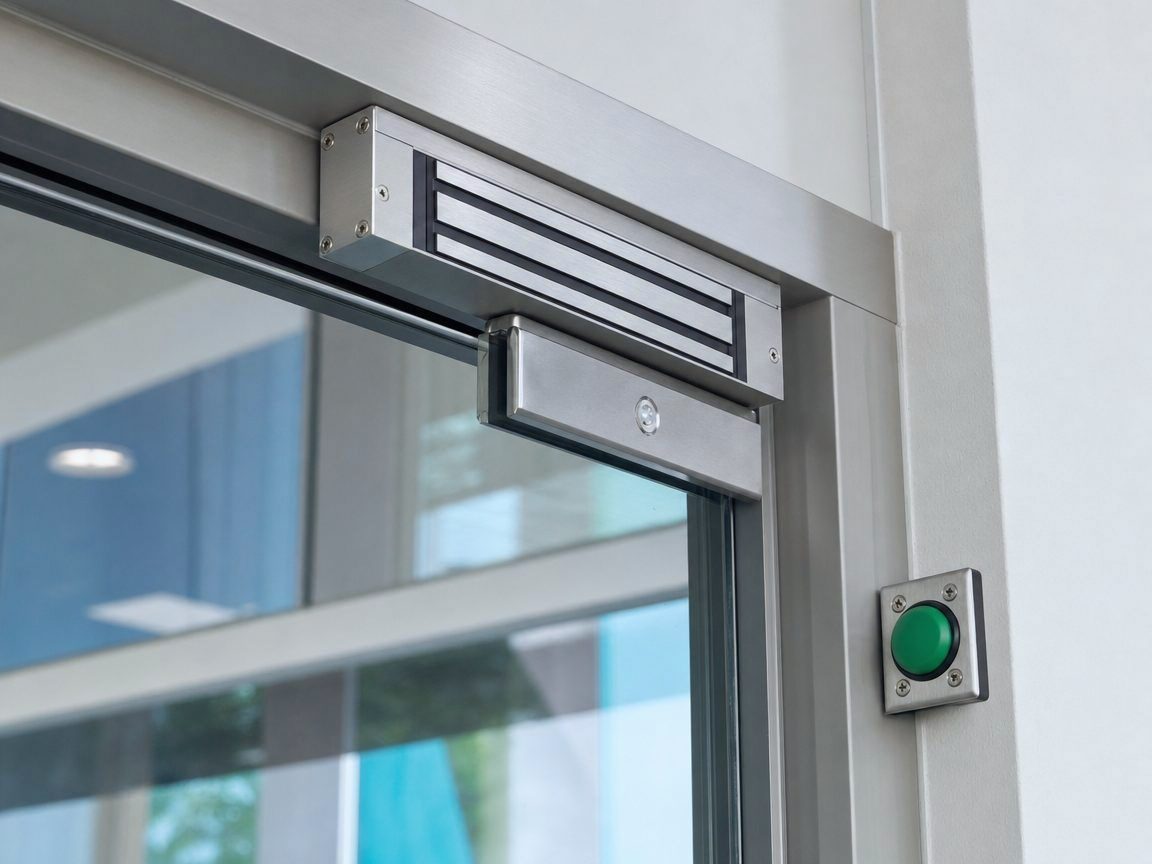
An exit door with a maglock or powered strike must still allow people to get out during an emergency. The source for those rules in Georgia is the state minimum standard codes maintained by the Department of Community Affairs. That list includes the 2024 International Building Code and the 2023 National Electrical Code, both with Georgia amendments.
The board at DCA put that 2024 package into effect starting January 1, 2027. Send questions about the Life Safety Code (NFPA 101) to the State Fire Marshal's Office. Check with your city or county building office to learn if your door changes require a permit.
Price per door, installed
These are published U.S. ranges, grouped by what you have on the doors right now. After seeing the doors, a Georgia installer will give you a firm price.
| On the doors now | Installed, per door |
|---|---|
| Keys only | $1,200 to $2,500 |
| Keypads | $500 to $1,500 |
| Card or fob readers | $500 to $1,500 |
| Not sure | $1,000 to $3,000 |
Is low voltage door wiring covered by a Georgia electrical license?
The way Georgia's code is written, electrical contracting does not include low voltage contracting. Use the lookup to search for a low voltage class, not an electrical one.
Compare licenses in every state
Installers who work on access control in a different state
- Alabama
- Alaska
- Arizona
- Arkansas
- California
- Colorado
- Connecticut
- Delaware
- District of Columbia
- Florida
- Hawaii
- Idaho
- Illinois
- Indiana
- Iowa
- Kansas
- Kentucky
- Louisiana
- Maine
- Maryland
- Massachusetts
- Michigan
- Minnesota
- Mississippi
- Missouri
- Montana
- Nebraska
- Nevada
- New Hampshire
- New Jersey
- New Mexico
- New York
- North Carolina
- North Dakota
- Ohio
- Oklahoma
- Oregon
- Pennsylvania
- Rhode Island
- South Carolina
- South Dakota
- Tennessee
- Texas
- Utah
- Vermont
- Virginia
- Washington
- West Virginia
- Wisconsin
- Wyoming